







Key Takeaways
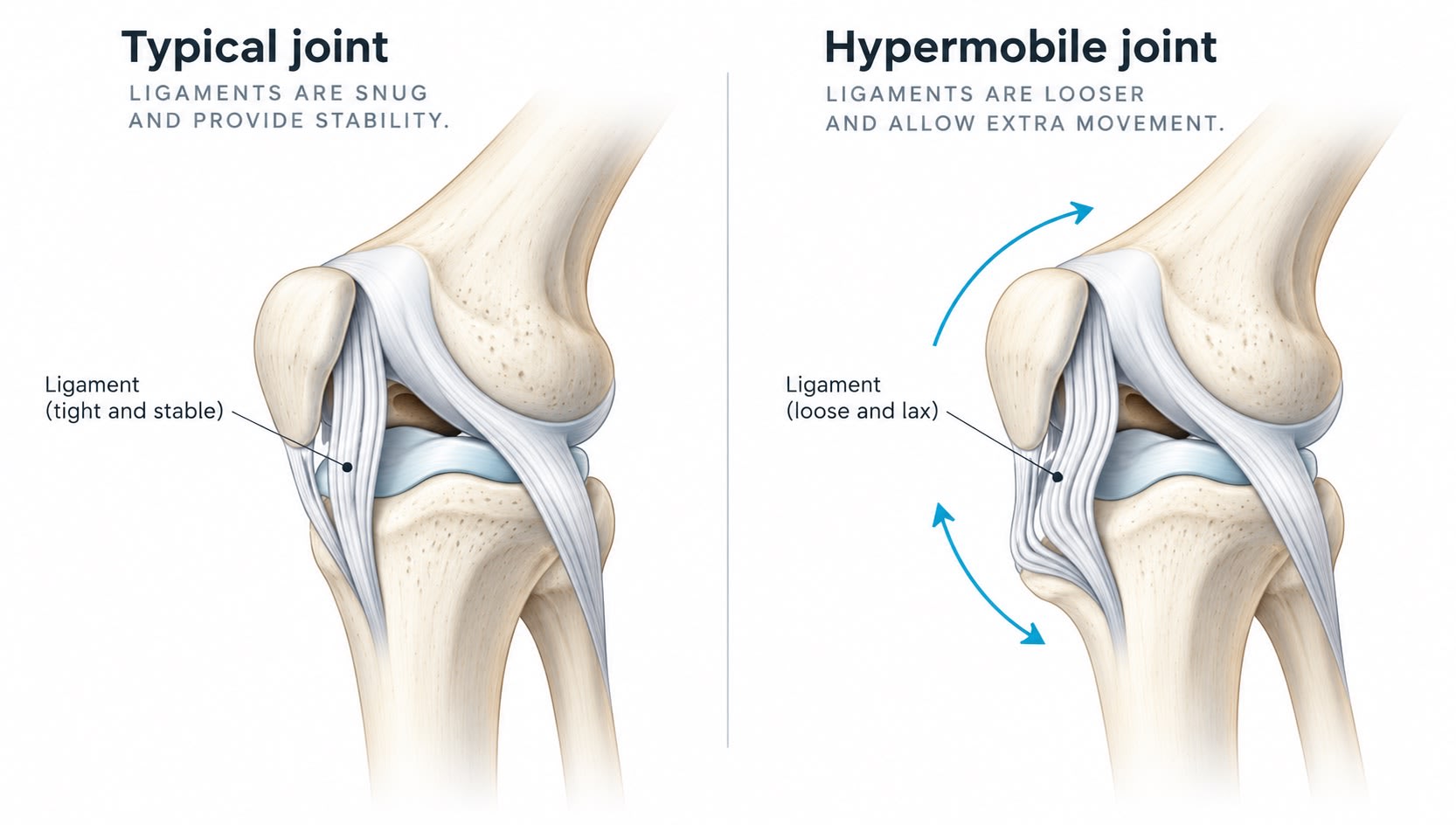
- EDS and hypermobility make ligaments loose, so muscles have to work constantly to hold joints in place.
- That is why sitting with EDS often causes fatigue, pain, and constant fidgeting.
- The pelvis is the foundation. When it rolls back, the whole spine collapses with it.
- The right support does the stabilizing for you, so your muscles can rest.
- Key areas to support: pelvis, feet, trunk, arms, and head.
In this blog, you'll learn:
- What EDS and joint hypermobility are
- Why sitting with EDS is so hard on your body
- The type of support that helps stabilize your joints in sitting
What Is Ehlers-Danlos Syndrome?
Connective tissue is your body's scaffolding. It is made largely of collagen and gives strength to ligaments, tendons, skin, blood vessels, and organs.
In EDS, that scaffolding is more fragile and stretchy than typical tissue. Here's what to know:
- There are 13 types of EDS, based on the 2017 international classification.
- Hypermobile EDS (hEDS) is the most common type. It is diagnosed through a clinical exam because no genetic marker has been found yet.
- Hypermobility spectrum disorder (HSD) is diagnosed when someone has symptomatic hypermobility but does not meet the full hEDS criteria.
- hEDS and HSD are managed in very similar ways, so everything in this article applies to both.
What Is Joint Hypermobility?
Many people are "double-jointed" and never have problems. It becomes a concern when that extra movement comes with pain, instability, injuries, or body-wide symptoms.
Common Symptoms of EDS and Hypermobility
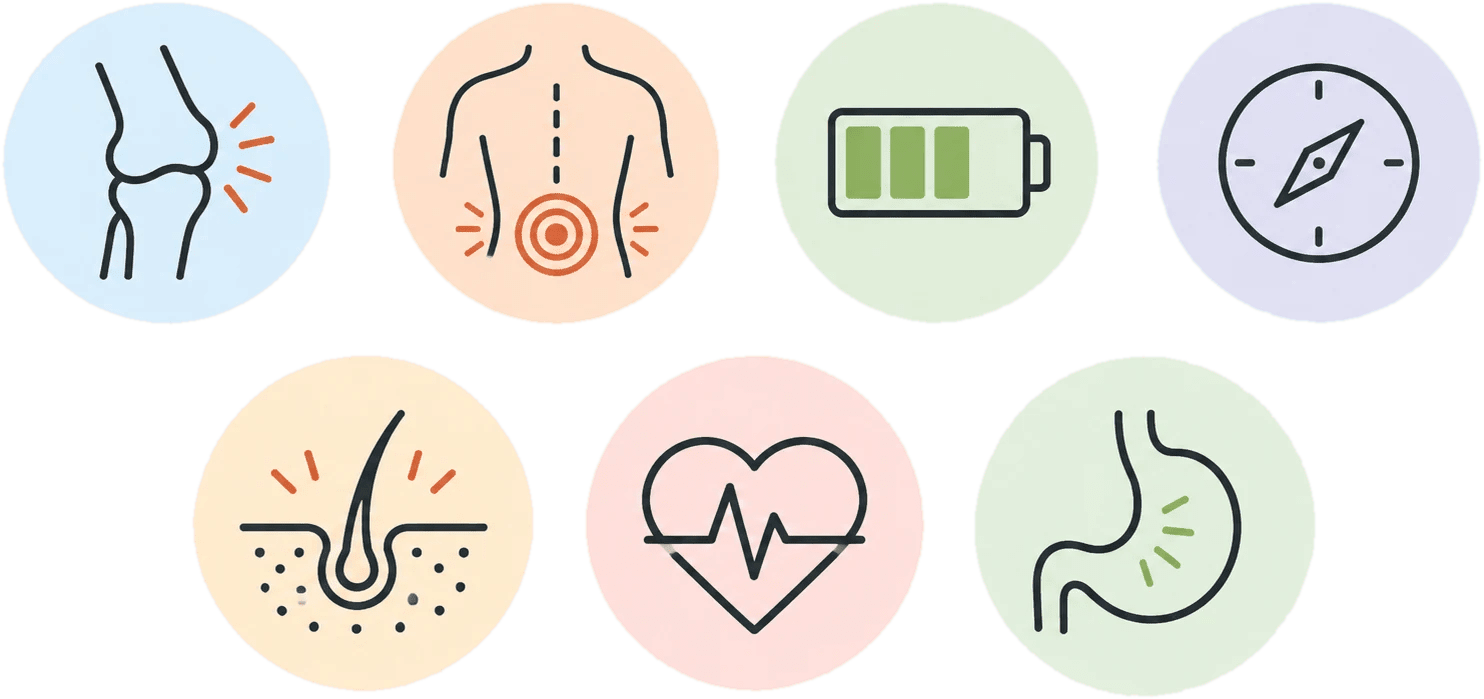
Every person with EDS is different, and symptoms can change day to day. The most common include:
- Joint instabilityjoints that feel loose, give way, or partially dislocate (subluxate) with little force
- Chronic painoften in the neck, back, hips, shoulders, and hands
- Fatiguemuscles work all day to stabilize joints that ligaments cannot hold
- Reduced proprioceptiona weaker sense of where your body is in space, so you may not notice poor positions until they hurt
- Skin changessoft, stretchy, or fragile skin that bruises easily or heals slowly
- Dysautonomia, such as POTSdizziness, a racing heart, or lightheadedness when sitting or standing upright
- Other symptomsdigestive issues, headaches, jaw (TMJ) pain, and poor sleep
Why Is Sitting So Hard with EDS?
For most people, sitting is passive. Ligaments act like built-in straps that hold the skeleton in place while muscles relax. With EDS, those straps are loose. Here's how that changes sitting.
1. Your muscles never get to rest
- When ligaments can't provide stability, muscles take over.
- Small stabilizing muscles around the spine, pelvis, hips, and shoulders stay switched on the whole time you sit.
- This constant effort drives fatigue, tightness, and end-of-day pain.
2. Your pelvis rolls back, and your spine follows
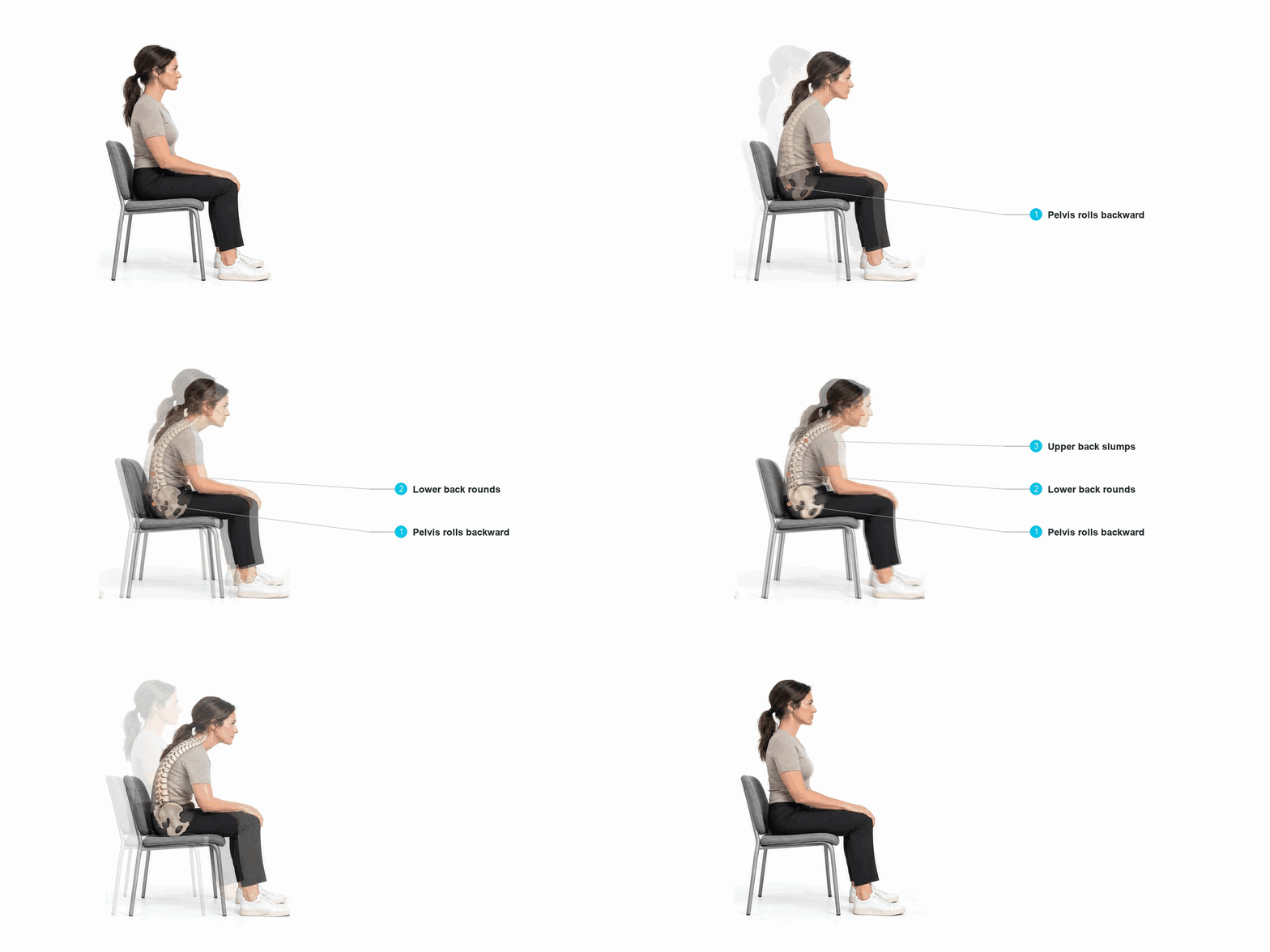
The pelvis is the foundation of sitting posture. Without support, it tips backward and your hips slide forward on the seat. Then a chain reaction happens:
- The lower back rounds
- The upper back slumps
- The head drifts forward
A hypermobile spine has little resistance to stop this collapse. You end up "hanging" on your ligaments at the end of their range, which is exactly where joints are most vulnerable.
3. You can't always feel it happening
Reduced proprioception quiets your body's early warning system. Many people with EDS don't notice they've slumped or locked a joint until pain shows up. That's why sitting up straight through effort alone is exhausting and rarely lasts.
4. You compensate in ways that create new problems
To feel stable, many hypermobile people instinctively:
- Sit cross-legged or tuck a foot underneath
- Wrap a leg around the chair leg
- Lean heavily on one elbow
- Lock knees or elbows into hyperextension
These positions feel stable because they push joints to their end range. Over time, they strain the sacroiliac (SI) joints, hips, knees, and shoulders.
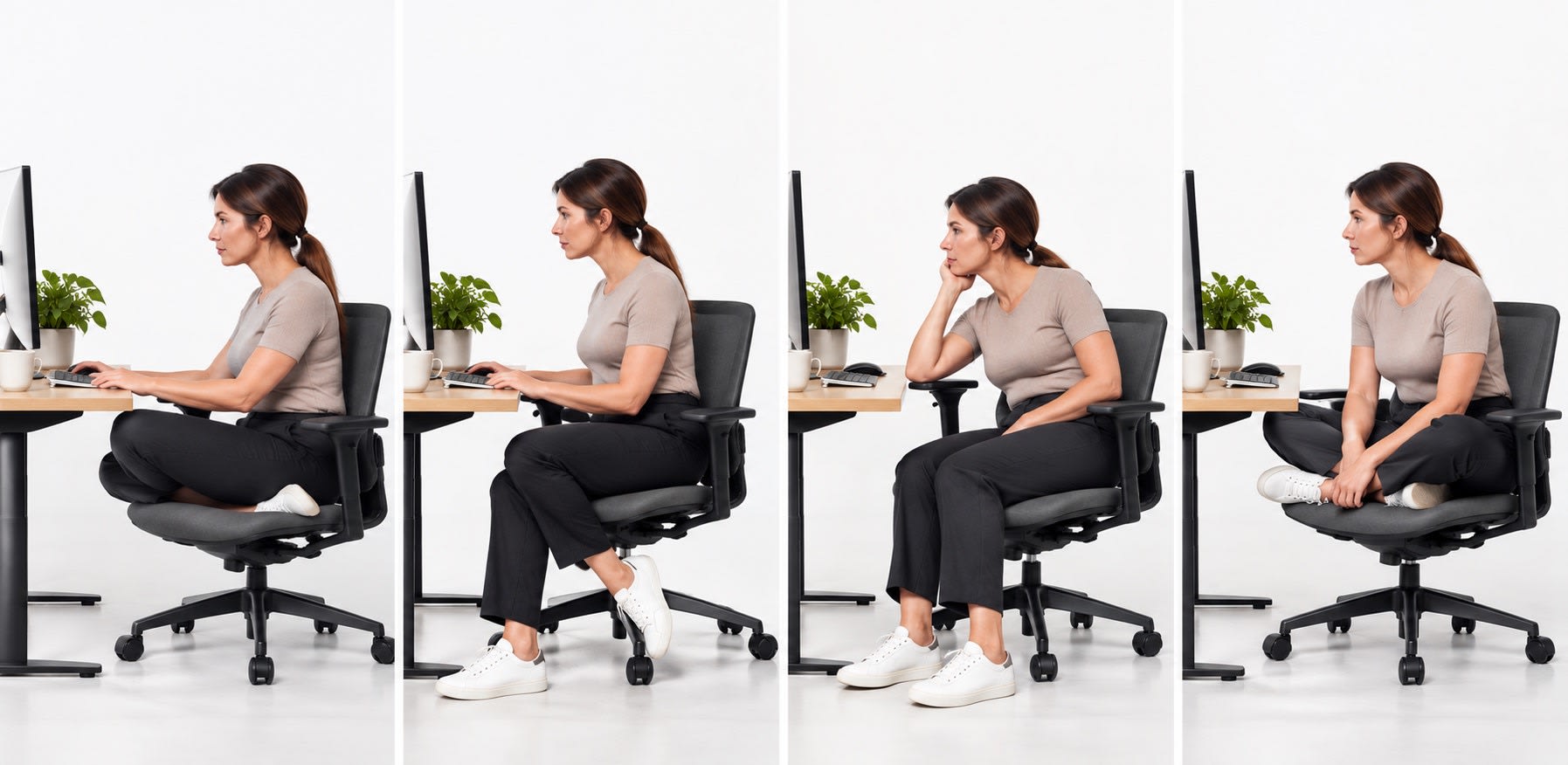
OT TIP: If you notice yourself reaching for these positions, treat it as information, not a failure. It usually means a part of your body needs more support than it's getting.
5. Unsupported arms pull on your shoulders and neck
- Your arms are heavy, and the shoulder is naturally one of the least stable joints.
- Without forearm support, arm weight pulls down on the shoulder joint.
- Neck and upper back muscles work overtime, which can trigger pain and subluxations.
6. Seats that don't fit make everything worse
- Too deep — you slouch or perch on the front edge
- Too high — your feet dangle with no stable base
- Too soft or sagging — the pelvis sinks and rolls with nothing firm to push against
7. POTS adds another layer
With POTS or other dysautonomia, sitting still with your legs down lets blood pool in the lower body. That can cause dizziness, brain fog, and fatigue. Movement and position changes matter even more.
How to Sit with EDS: Support That Stabilizes Your Joints
In wheelchair seating, therapists follow one guiding principle:
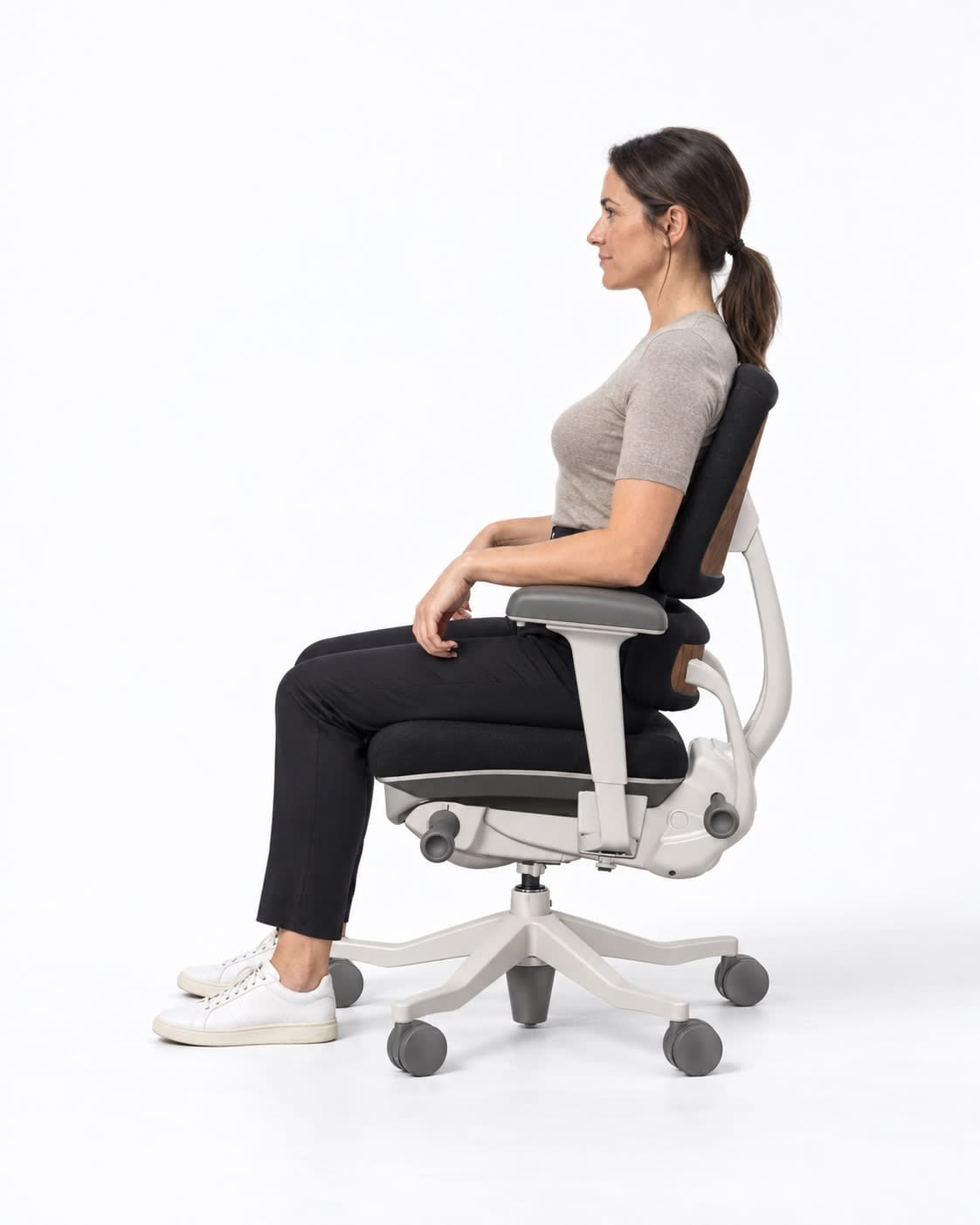
In plain terms: when your core (pelvis and trunk) is stable, your arms, hands, and head are free to move and work. For EDS, the goal is to let your seating provide the stability your ligaments can't, so your muscles can stop guarding and start recovering.
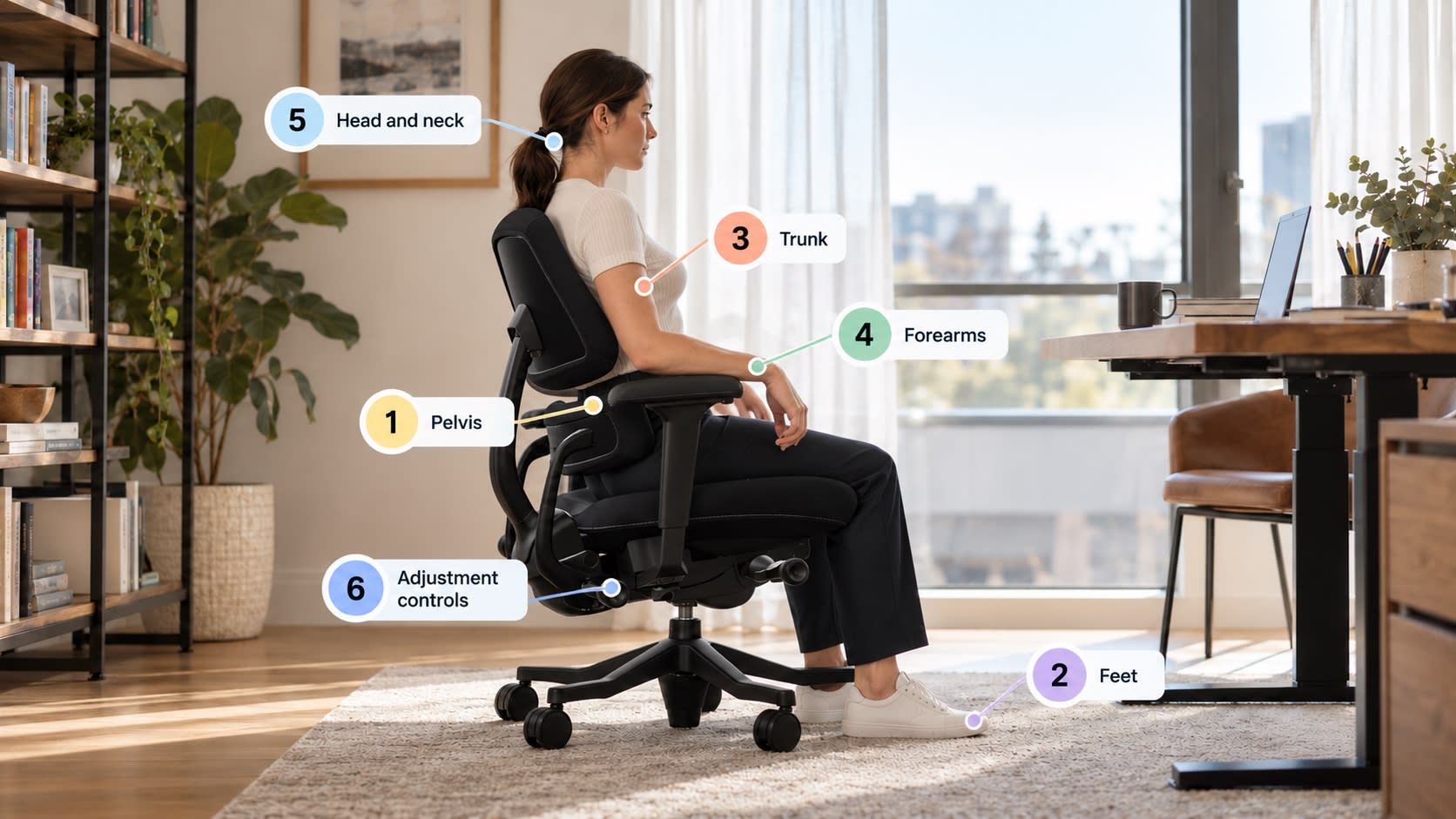
1. Start with a stable pelvis
- Firm, contoured seat — cradles the pelvis and thighs and resists sliding
- Support behind the pelvis — support at the base of the spine (sacrum and lower lumbar area) blocks the pelvis from rolling back
- Correct seat depth — sit all the way back with two to three finger widths between the seat edge and the back of your knees
2. Give your feet a solid base
- Feet flat on the floor or a footrest
- Hips and knees at about 90 degrees, or hips slightly more open
- A stable foot base reduces the urge to wrap or tuck your legs
3. Let your trunk rest instead of holding it up
- Choose a backrest that follows the natural curves of your spine
- A slight tilt lets the backrest share more of your body weight
- If your trunk is very unstable, side (lateral) trunk support may help
4. Unload your shoulders
- Set armrests at elbow height so forearms rest lightly
- Shoulders should be relaxed, not hiked up or hanging down
- A desk at the correct height can do the same job
5. Support your head and neck when you lean back
A headrest or neck support helps during reading, calls, or breaks, so your neck muscles aren't holding up your head all day. This is especially useful for neck pain, headaches, or cervical instability.
6. Make adjustments easy and precise
- Controls should work without forceful gripping or twisting, which can stress hypermobile hands and wrists
- Small, precise changes to seat height, depth, back height, and armrests make a big difference
7. Keep moving, with support
- Change position every 20 to 30 minutes
- Take short standing or walking breaks
- Do strengthening and proprioception exercises from your PT or OT
- For POTS: move your legs, consider compression garments, and elevate your legs when needed
OT TIP: Set a gentle timer for position changes. With reduced proprioception, a reminder works better than waiting until you feel discomfort.
8. Get a professional seating assessment
EDS affects everyone differently, so there's no single perfect setup. An occupational or physical therapist with seating experience can assess your posture, joint stability, and daily routine, then recommend supports and exercises that fit your body.
Quick Seating Checklist for EDS and Hypermobility
Use this checklist to review your current setup:
| Body area | What to look for | Why it helps |
|---|---|---|
| Pelvis | Firm, contoured seat with support behind the pelvis | Stops the pelvis rolling back so the spine stays stacked |
| Thighs and seat depth | Two to three finger widths behind the knees | Lets you sit fully back without perching or slouching |
| Feet | Flat on the floor or a footrest | Gives a stable base and reduces leg wrapping |
| Trunk | Backrest that follows your spine, slight recline | Lets the chair share your body weight |
| Shoulders and arms | Armrests at elbow height | Takes the weight of the arms off the shoulder joints |
| Head and neck | Headrest for reclined or resting tasks | Gives neck muscles a break |
| Adjustments | Easy controls that need little grip or twisting | Protects hypermobile hands and wrists |
Frequently Asked Questions About Sitting with EDS
What is the best sitting position for EDS?
The best sitting position for EDS keeps the pelvis upright and supported, feet flat, back resting against a supportive backrest, and forearms resting at elbow height. The goal is for the chair to hold you in a neutral position in slight tilt so your muscles and ligaments are not doing all the work.
Why do people with hypermobility sit cross-legged or in odd positions?
Hypermobile people often sit cross-legged, tuck a foot under, or lock their joints because pushing a joint to its end range creates a feeling of stability. It is a sign the body needs more external support, but over time these positions can strain the hips, knees, and SI joints.
Can sitting make EDS pain worse?
Yes. Long periods of unsupported sitting can increase EDS pain because stabilizing muscles fatigue and joints drift into end-range positions. Good support, regular position changes, and short movement breaks can reduce that strain.
Is a soft chair better for hypermobility?
Not usually. Very soft or sagging seats let the pelvis sink and roll, which offers nothing stable to push against. A firm, contoured seat with support behind the pelvis generally provides better joint stability for people with hypermobility.
Should I see a therapist about sitting with EDS?
An occupational or physical therapist with seating experience can be very helpful. They can assess your posture, joint stability, and daily routine, then recommend positions, supports, and exercises tailored to you.
The Bottom Line
Sitting is hard with EDS because your body is doing a job that loose connective tissue can't. The answer isn't to try harder to sit up straight. It's to give your body the external stability it needs:
- A supported pelvis
- A solid base for your feet
- A trunk that can rest
- Arms that aren't pulling on your shoulders
When your support does the stabilizing, your muscles get to rest, your joints are protected, and you have more energy for the rest of your day.
This article is for educational purposes only and is not a substitute for medical advice. Please talk with your physician, physical therapist, or occupational therapist about your individual needs.
References
- Malfait F, Francomano C, Byers P, et al. The 2017 international classification of the Ehlers-Danlos syndromes. American Journal of Medical Genetics Part C. 2017;175(1):8-26.
- Tinkle B, Castori M, Berglund B, et al. Hypermobile Ehlers-Danlos syndrome (a.k.a. Ehlers-Danlos syndrome Type III and Ehlers-Danlos syndrome hypermobility type): Clinical description and natural history. American Journal of Medical Genetics Part C. 2017;175(1):48-69.
- Castori M, Tinkle B, Levy H, et al. A framework for the classification of joint hypermobility and related conditions. American Journal of Medical Genetics Part C. 2017;175(1):148-157.
- Hakim A, O'Callaghan C, De Wandele I, et al. Cardiovascular autonomic dysfunction in Ehlers-Danlos syndrome, hypermobile type. American Journal of Medical Genetics Part C. 2017;175(1):168-174.
- Clayton HA, Jones SA, Henriques DY. Proprioceptive precision is impaired in Ehlers-Danlos syndrome. SpringerPlus. 2015;4:323.